Divvy
DivvyWhy it feels awkward (and why you should ask anyway)
Asking feels like accusing a friend of being a deadbeat. It isn't. The overwhelming majority of unpaid debts between friends are forgetfulness, not avoidance — they got busy, the dinner faded from memory, and there was never a number attached. You covered money that was theirs to pay; asking for it back is neutral, not rude. What actually damages friendships is the silent resentment of never asking.
Scripts that work
The casual first ask: "Hey! Sending around the totals from Saturday — you're at $34. Venmo works, or whatever's easy."
The gentle reminder (3–5 days later): "Bumping this in case it got buried — $34 from Saturday. No rush, just keeping my books straight."
The group version: "Receipts from the trip are totaled — everyone's share is in the link. Settle up when you get a sec!"
The direct version (when it's been weeks):"Hey — I need to close out that $120 from the concert tickets. Can you send it this week?" Direct is not rude. Vague is how debts die.
Send a request, not a hint
A payment request beats a conversation every time: it names the amount, it arrives inside the app they'll pay from, and it can be fulfilled in two taps at 11pm without either of you performing feelings about it. Attach the why — an itemized breakdown — and there's nothing left to argue with. The awkwardness of money talk mostly lives in ambiguity; the receipt kills the ambiguity.
Let Divvy be the bad guy
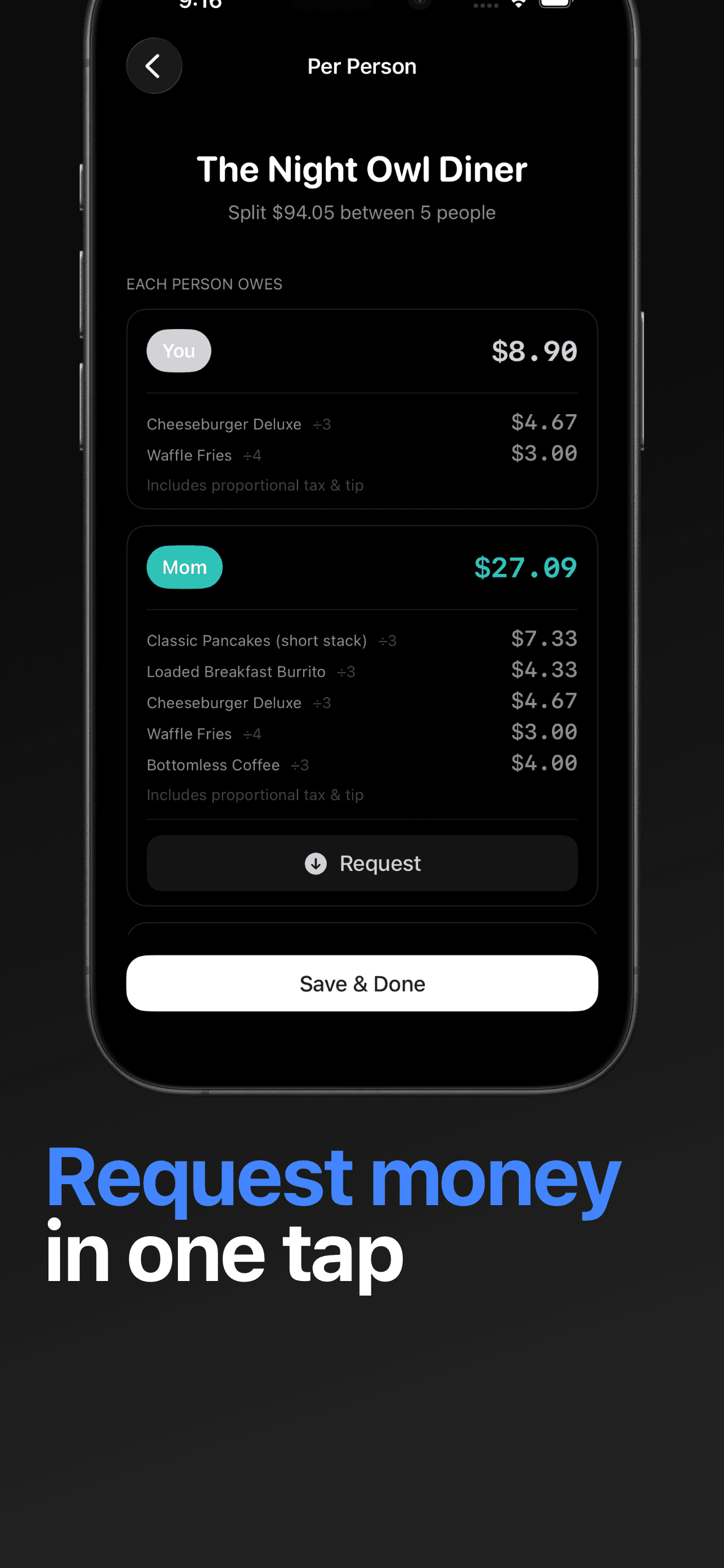
The best version of the ask is the one you never write. Divvy turns the receipt into per-person totals and sends the requests for you:
- 1Scan the receiptAI itemizes it in seconds — every person's share includes their real tax and tip.
- 2Everyone sees their breakdownFriends get a link with exactly what they ordered. No app, no account, no dispute.
- 3Request in one tapDivvy opens a pre-filled Venmo or Cash App request for each person's exact share.