Divvy
DivvyNot every bill splits the same way
- Rent — split by room, not evenly, when rooms differ. A master with a private bath is worth more than the room by the kitchen. Square footage or a simple negotiated premium both work (our rent split calculator does the math by room size or income).
- Utilities and subscriptions — split evenly. Internet, electricity, water, and the streaming stack benefit everyone roughly equally, and metering them per person costs more goodwill than it saves.
- Groceries and household runs — split by receipt. One roommate's protein powder and another's oat milk shouldn't be a flat three-way split; shared staples should. This is the one category where itemizing actually matters.
Set a monthly system, not a running argument
Put each recurring bill in one person's name so autopay never lapses — one roommate owns internet, another electricity. Then pick a fixed settle-up day (the 1st, right after rent) where all the balances net out. A predictable ritual removes the drip of "hey, you owe me $23" texts that erodes roommate goodwill.
The grocery-receipt problem
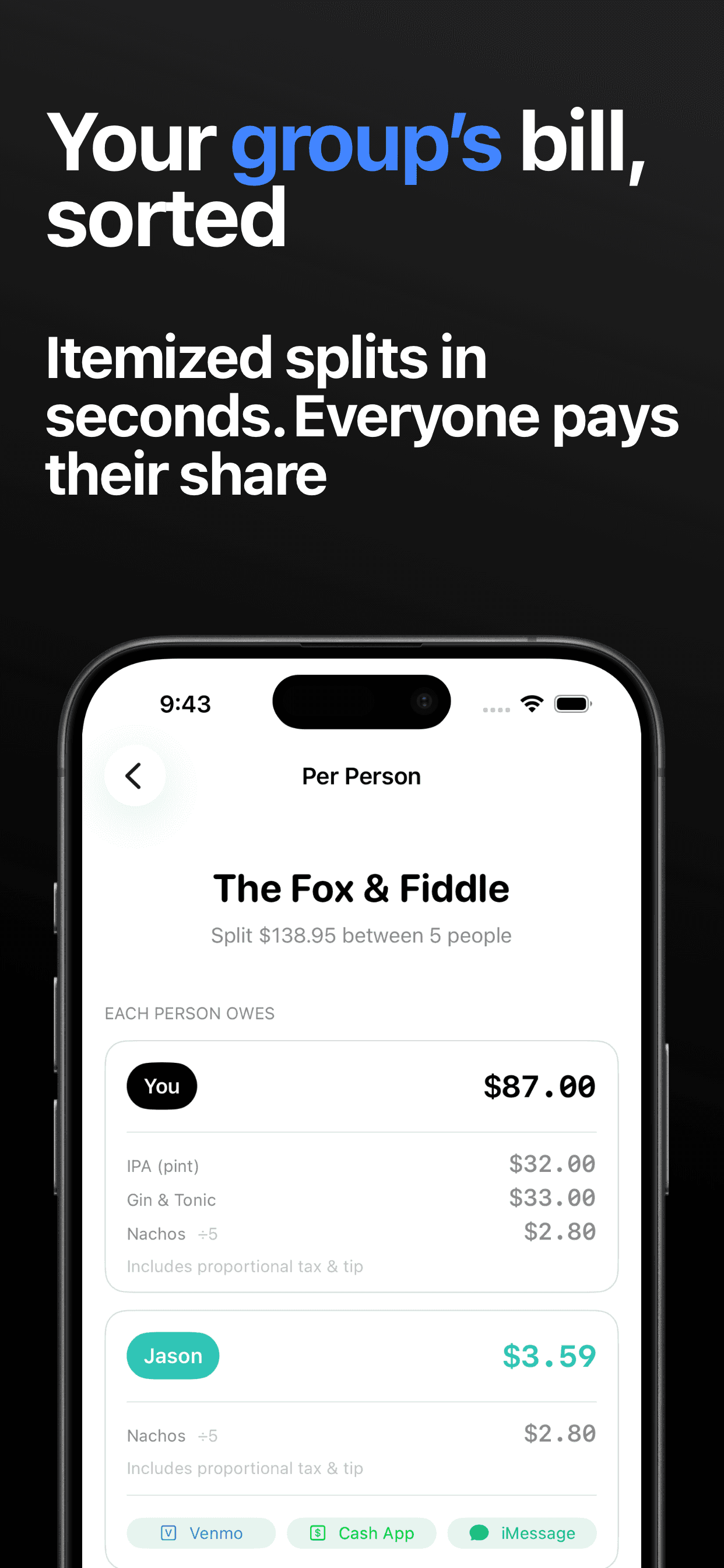
Grocery receipts are where even splits quietly go wrong: 40 line items, half shared, half personal. The fair method is to assign personal items to their owner, split staples across everyone, and split the tax proportionally. Nobody does that by hand — which is exactly why it's the killer use case for receipt scanning.
Run it in Divvy
- 1Make a roommates groupOnce. It holds every shared expense for the household — roommates don't even need the app.
- 2Scan receipts as they happenGroceries, Costco runs, the plumber. AI reads every line item; tap who each item belongs to.
- 3Add recurring billsRent, internet, utilities go in as they're paid, split however you've agreed.
- 4Settle once a monthThe running balance nets everything to one number per person — request it with one tap.