Divvy
Average Rehearsal Dinner Cost Per Person in 2026
By The Divvy Team · October 15, 2026 · 15 min read
Couples married in 2024 spent $2,700 on average on their rehearsal dinner. For planning purposes, use $55 to $150 per person, then adjust for guest count, venue, bar package, taxes, gratuity, and fixed fees.
That headline number is useful only as a starting benchmark. It describes an entire event, not a restaurant menu, and it won't tell you what one guest will cost or what a host, parent, or wedding-party member will owe after the final bill arrives.
The right question isn't, “What's the average rehearsal dinner cost per person?” It's, “What will the settled amount be after every shared and individual charge is allocated fairly?”
Table of Contents
- What the National Average Actually Means
- What Drives the Per-Person Number
- How Venue Choice Reshapes the Math
- From Menu Price to Settled Price
- Who Pays and How the Bill Is Split
- Settling the Bill When Guests Consume Unevenly
- Putting It Together Before You Book
What the National Average Actually Means
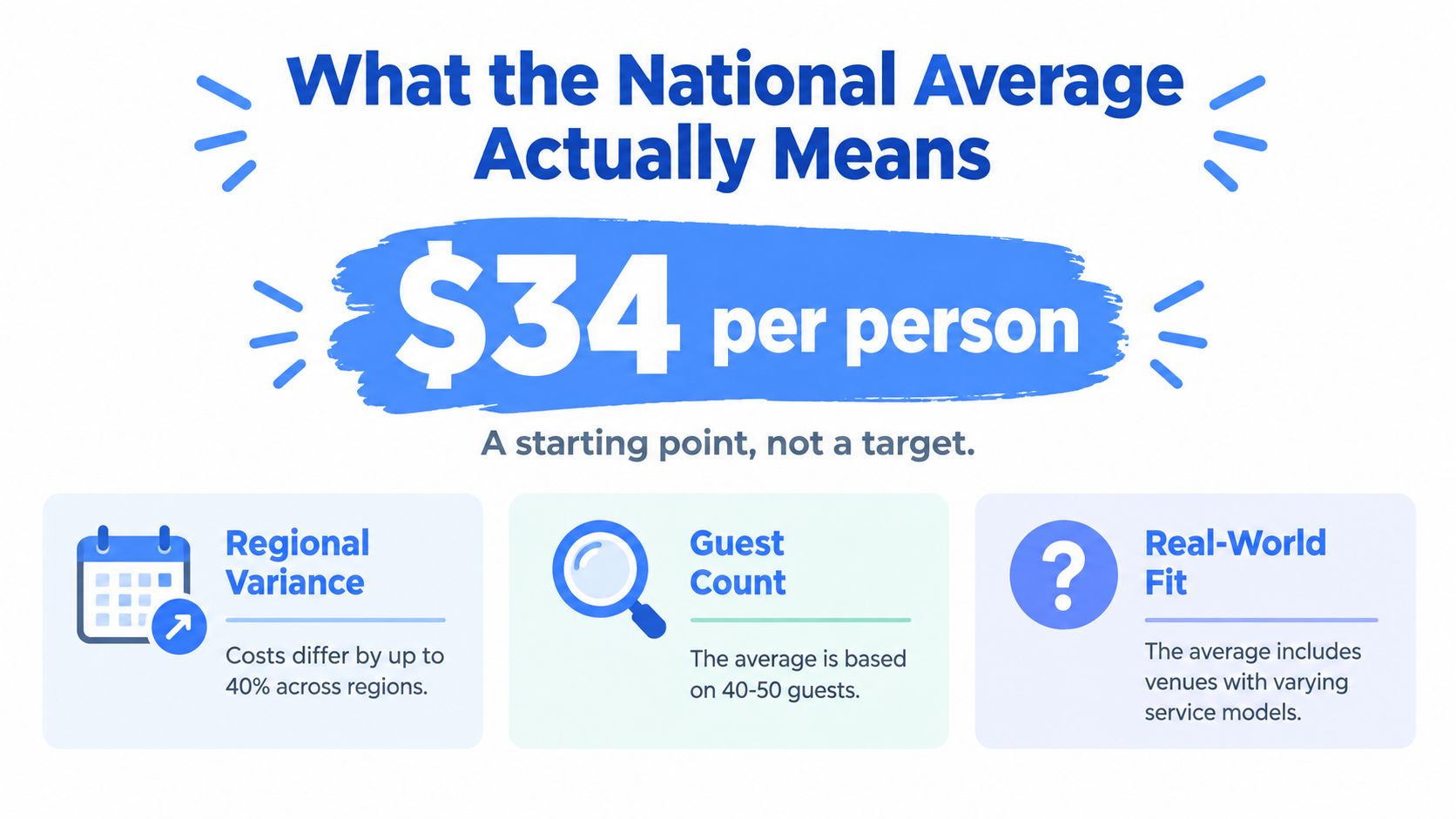
$2,700 is the reported national average for couples married in 2024, but it is an event-level figure, not a menu price. The Knot's rehearsal dinner cost data tracks the total rising from roughly $2,300 in 2021 to $2,400 in 2022, then reaching $2,700 in both 2023 and 2024. The total can include venue, invitations, catering, décor, and other event costs.
Divide $2,700 among 30 guests and the starting arithmetic is about $90 per person. That calculation is only a benchmark. A different guest count changes the implied amount immediately, and the final settlement still depends on what the quote includes. Published working estimates place many dinners between $55 and $150 per person, with venue, menu, beverages, service style, taxes, and gratuity driving the spread.
Use the average as a benchmark, not a booking target
Three variables matter more than the headline average:
- Guest count: Fixed room fees and venue minimums can make a small dinner expensive per guest.
- Venue tier: A neighborhood restaurant, private event space, home, or destination venue creates a different cost floor.
- Included items: One quote may include service and nonalcoholic drinks, while another covers only the plated meal.
A $2,700 budget may exceed what a casual local dinner needs and fall short for a destination event. Use the national figure to test whether your first idea is plausible, then build an all-in estimate from the actual quote.
Outdoor events need the same discipline. A restaurant may bundle staffing, furniture, lighting, and weather protection into its package. An outdoor setup may require each separately, so review a marquee hire price guide alongside catering and venue charges.
Start by multiplying your expected headcount by a working figure within the $55 to $150 range. Add fixed charges separately, then ask which costs are shared and which belong to specific guests. The result is a booking filter, not the settled amount.
What Drives the Per-Person Number
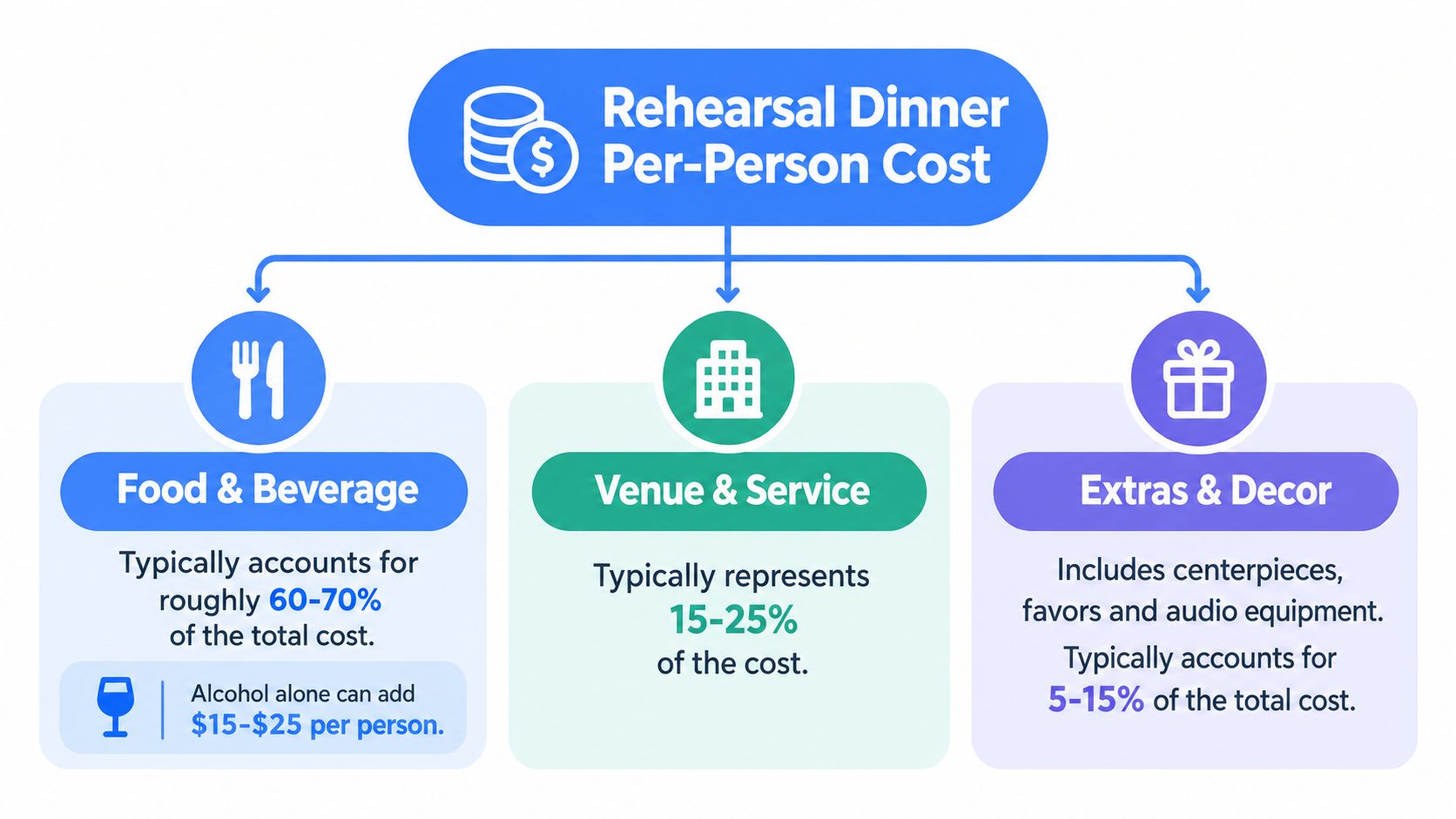
Food and beverages usually claim the largest share of a rehearsal dinner budget, roughly 60–70%. Venue rental can account for approximately 15–25%, while taxes and gratuity may add another 15–25% to food and drink costs. Treat these percentages as planning inputs, not a final quote.
That split shows why a printed menu price rarely equals the amount guests owe. A $60 menu becomes $72 when taxes and gratuity add a combined 20%. Room fees, décor, transportation, and entertainment still sit outside that calculation.
Alcohol changes the variable cost
Bar configuration can change the quote faster than almost any other choice. A full open bar lasting three to four hours can add approximately $35–$60 per guest beyond dinner. For a 30-person event, that adds $1,050–$1,800 before other charges.
A hosted bar can still be the right decision. Choose it deliberately, then compare the added hospitality with the variable cost. Beer and wine, a limited drink selection, or one hosted welcome cocktail can give guests a generous experience without charging every guest for a full premium bar.
Review each proposal line by line:
| Quote component | What to verify |
|---|---|
| Food | Menu, courses, dietary substitutions, dessert, and children's meals |
| Beverages | Nonalcoholic drinks, hosted bar, consumption pricing, or drink limits |
| Venue | Room rental, minimum spend, setup time, cleanup, and staffing |
| Service | Service charge, gratuity policy, and whether the charge replaces or supplements tip |
| Tax | Taxable items and whether tax applies before or after service charges |
| Extras | Décor, rentals, entertainment, transportation, and vendor meals |
Practical rule: Convert every proposal to the same all-in per-person format before comparing venues. A lower menu price can produce a higher settled bill.
For broader wedding trade-offs, capture your budget wedding provides useful context when the rehearsal dinner competes with other pre-wedding expenses. Choose the quote with the clearest settled price, not automatically the lowest printed menu number.
How Venue Choice Reshapes the Math
Venue choice establishes the cost structure before you select the entrée. A neighborhood restaurant may bundle staffing and table settings into the meal, while a backyard shifts those responsibilities to rentals, catering, setup, and cleanup.
A useful comparison is the difference between a smaller local dinner and a destination event. Dinners for weddings with 50 or fewer guests average about $1,630, while destination rehearsal dinners average about $3,838, according to Pix's rehearsal dinner guide. Those are total-event benchmarks, not settled per-person prices, but they show why one national average can't represent both formats.
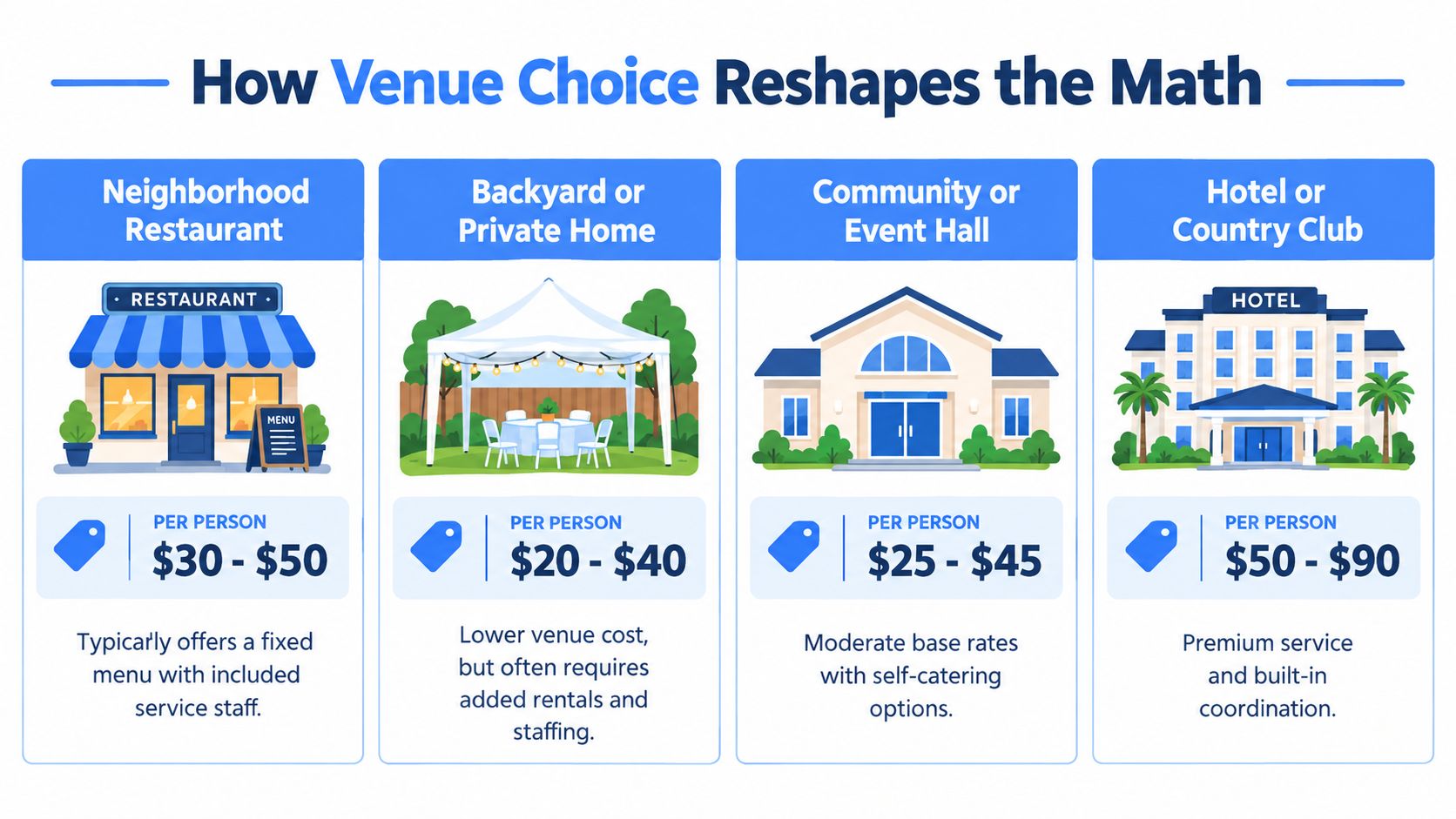
Four venue patterns to compare
Neighborhood restaurant. This is usually the cleanest operational choice. The kitchen, servers, tableware, and basic service are already in place, so you can focus on the contract and guest experience. The risk is a private-room minimum or a bar policy that remains fixed even if attendance drops.
Private dining room or event space. You gain privacy and more control over timing, speeches, décor, and seating. You may also inherit a room fee, staffing charge, required caterer, or minimum spend. A shorter guest list can raise the effective cost per person when those charges don't shrink with attendance.
Backyard or host-home dinner. The venue may cost less, but the work moves elsewhere. Tables, chairs, linens, lighting, serving equipment, catering labor, weather protection, and cleanup all need explicit line items. A home dinner is cheaper only when the added logistics remain below the restaurant alternative.
Destination dinner. Travel markets and resort properties often bundle coordination, food, and service into a premium package. Guests may also face lodging and transportation costs, so decide carefully whether the dinner is a hosted obligation, a wider welcome event, or a smaller gathering for the wedding party and immediate family.
Test the minimum before cutting people
Ask the venue two questions before trimming the guest list:
- What charges remain if attendance falls?
- Does the minimum apply to food, beverages, the room, or the entire event?
If a private-room fee remains fixed, removing guests may save only the variable meal and drink costs. Switching from an open bar to limited drinks can reduce the variable cost for everyone who attends, making it more effective than cutting a few guests.
From Menu Price to Settled Price
A menu price is a starting line. The settled price is what remains after service charges, tax, drinks, fixed room fees, and any host-paid extras are assigned.
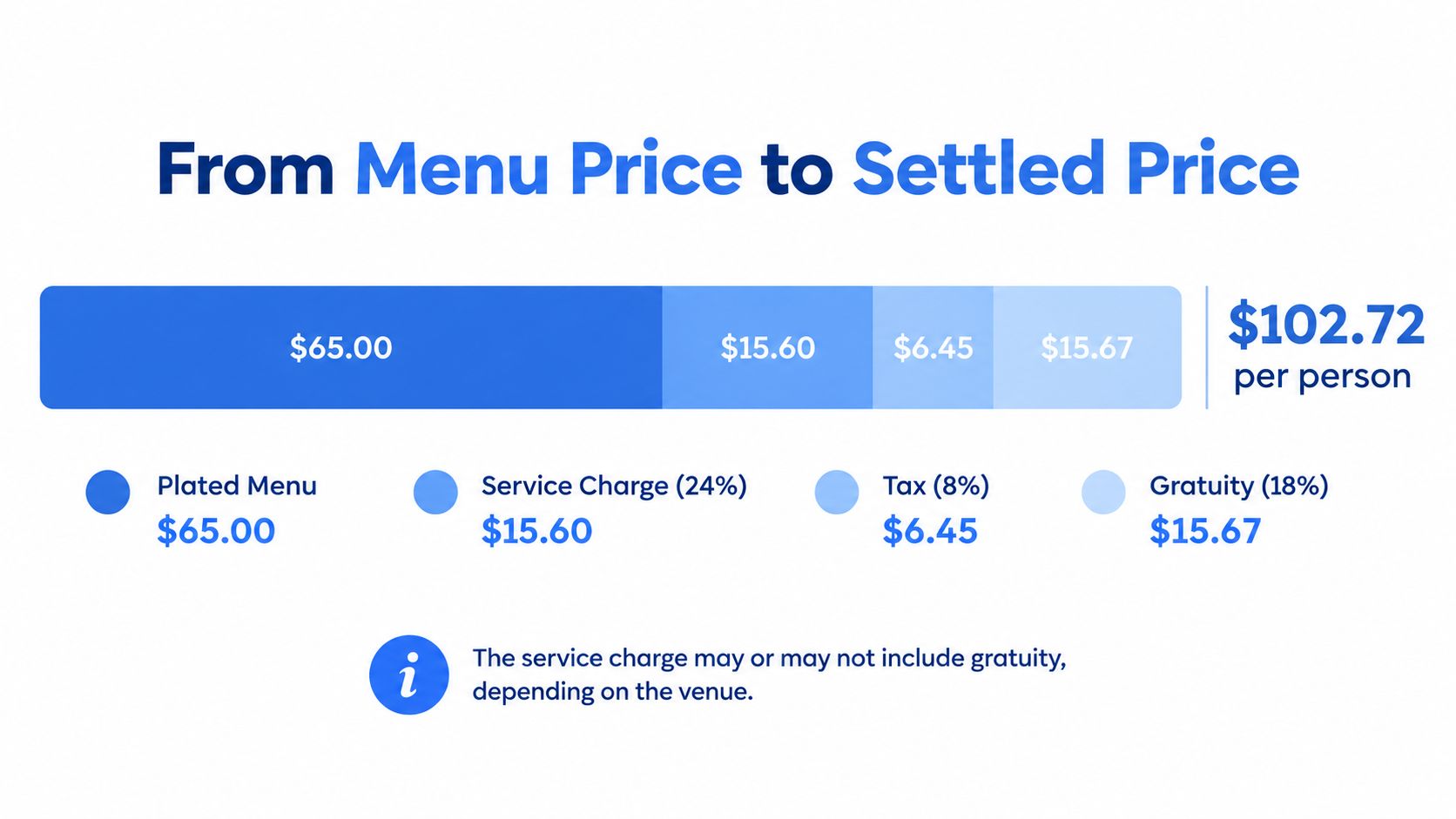
Consider a $65 plated menu with a 24% service charge and 8% tax, plus drinks and a private-room fee. One published example notes that a $65 menu can exceed $100 per person after a 24% service charge, 8% tax, and drinks, as explained by DiningRated's rehearsal dinner cost guide.
Run every quote through four lines
Write the proposal in this order:
- Menu: Start with the food and included nonalcoholic beverages.
- Percentage charges: Add service charge, tax, and any stated gratuity using the venue's calculation method.
- Fixed fees: Divide the private-room fee, venue rental, setup charge, and other shared amounts across the expected headcount.
- Bar configuration: Add hosted drinks, consumption charges, or a limited package based on the actual plan.
The order matters because percentage charges may apply to different bases. A venue may calculate tax on food and drinks but not on a room fee, or apply a service charge before tax. Ask for a sample final invoice, not only a package sheet.
A service charge also isn't automatically the same as gratuity. Read what a service charge means before assuming staff tip is included. The contract should state who receives the charge, whether an additional gratuity is expected, and which items are taxable.
Compare settled prices, not attractive menus
A venue with an $80 menu can be less expensive than one with a $65 menu if the first quote includes service, tax, and drinks while the second adds them later. The reverse can also happen when the higher menu carries a modest room fee and the lower menu requires a large minimum.
Apply the same inclusions to every proposal. If you are also tracking related wedding spending, keep separate line items for registry services and dinner costs. For example, review gift registry costs independently rather than allowing small wedding expenses to disappear inside one broad “reception” figure.
Who Pays and How the Bill Is Split
There are three workable payment models. Choose one before invitations go out, because guests should know whether they are attending a hosted dinner, buying their own drinks, or contributing toward the meal.
Host pays everything
This is the cleanest guest experience. The hosts cover food, beverages, service charges, tax, gratuity, and agreed extras. It works well when parents or the couple have set aside a defined hospitality budget and want complete control over the evening.
The weakness is financial ambiguity. If guests add expensive drinks or the venue extends the bar, the host absorbs the increase unless the contract sets limits. Put the bar duration, package, and included items in writing.
Host covers food and guests buy drinks
This model can work at a casual restaurant, but only if guests hear the arrangement clearly before the event. The host pays the shared meal and everyone orders alcoholic drinks individually, or guests purchase drinks directly at the bar.
Don't use this approach when the venue presents a single bundled package that makes individual allocation difficult. It also creates awkwardness if some guests assume the evening is fully hosted. The invitation or personal message should explain the format plainly.
Guests contribute a fixed amount
A fixed contribution makes the host's budget predictable. It can be appropriate for a destination gathering or a group that has agreed to share the cost, but the contribution should be communicated as an expected amount rather than revealed after dessert.
The calculation must account for who is included. Children, vendors, plus-ones, and wedding-party members may not receive the same meal or drink package. Decide whether the couple, parents, or hosts absorb those exceptions before presenting the contribution.
For mixed groups, an itemized restaurant bill-splitting approach is more defensible than a vague equal split. Assign shared appetizers evenly, keep host-paid items outside the guest balance, and make individual drinks visible.
A fair payment plan is announced before the dinner, not negotiated from a receipt after everyone has eaten.
Venue minimums deserve special attention. If the host promises to cover the meal but asks guests to buy drinks, specify whether the beverage minimum is hosted, individual, or shared. Otherwise, the group may think it has chosen a lower-cost model while the host still carries the contractual shortfall.
Settling the Bill When Guests Consume Unevenly
Equal splitting looks easy until the table includes different drinking habits. Two guests may have little or no alcohol, two may order several drinks, and the rest may fall between those extremes. Charging everyone the same amount makes light drinkers subsidize the bar tab.
Start with the receipt, not memory. Assign each entrée, drink, and individually ordered item to the person who consumed it. Split shared appetizers, family-style dishes, décor, and other communal costs evenly among the people who benefited.
A practical allocation method
- Assign individual items. Each guest receives the meals, drinks, and extras they ordered.
- Divide shared items. Split appetizers, shared desserts, room fees, and host-approved common expenses among the relevant attendees.
- Allocate tax proportionally. Each person receives a share of tax based on their assigned subtotal.
- Allocate tip proportionally. Apply the same method to gratuity or any tip that isn't already included.
- Remove host-paid items. Mark the couple's meal, selected shared items, or welcome drinks as hosted before requesting reimbursement.
- Round only at the end. Keep the calculation precise until each person's final balance is ready.
For instance, the two light drinkers should pay for their meals and their proportion of shared food, but not absorb the heavy drinkers' individual bar orders. The heavy drinkers pay more because their assigned subtotal is higher, and they also carry a proportional share of tax and tip.
The line-item cost breakdown method follows this logic without forcing the group to pretend every person consumed the same amount. It also avoids the common error of assigning tax and tip manually after splitting only the food.
Keep the process socially simple
The person organizing the dinner should explain the method once and send each guest a clear total. Guests shouldn't need to reconstruct the receipt or debate whether a shared plate was communal.
Divvy is one option for this type of settlement. Its iPhone app scans receipt line items, lets users assign items or split shared dishes, allocates tax and tip proportionally, and can send payment requests through common money apps. People receiving a request don't need to install the app or create an account.
Putting It Together Before You Book
A reliable rehearsal dinner budget has two outputs: the all-in event total and the settled amount per person. The first helps the hosts decide whether the plan fits their budget. The second determines what each attendee, family member, or contributor will pay.
Use this booking sequence.
Normalize every quote
Ask each venue for food, drinks, service charge, tax, gratuity, room fees, minimums, rentals, and fixed extras. Convert the result into one all-in per-person figure using identical assumptions. If a venue won't provide a final-style estimate, treat that lack of clarity as a contract risk.
Stress-test the headcount
Run the quote against your expected guest list and identify which charges are fixed. A smaller group may reduce meals and drinks while leaving a room minimum untouched. The number that matters is not only the total invoice, but the settled cost after every fixed charge is distributed across the actual attendees.
Choose the payment model early
Decide whether the hosts pay everything, guests buy their own drinks, or attendees contribute a fixed amount. Include exceptions for children, vendors, plus-ones, and any guest who receives a different menu. Put the arrangement in writing so nobody has to infer the rules from the check.
Settle uneven consumption deliberately
Decide before the dinner whether the group will split equally or assign items individually. Equal splitting is acceptable when consumption is similar. When drinks and extras vary, item-level assignment with proportional tax and tip is the fairer method.
The strongest cost-saving decision is often structural, not cosmetic. Cutting guests may save less than expected when a venue minimum remains fixed, while replacing an open bar with limited drinks reduces the variable cost for every attendee. Book the venue only after you know the menu price, settled price, payment model, and settlement method.
Use Divvy to scan the rehearsal dinner receipt, assign meals and drinks, split shared items, and allocate tax and tip by each person's actual share. Visit Divvy before the event so you can settle the bill clearly instead of rebuilding the math afterward.