Divvy
Divvy10 Money Sending Apps for Every Payment Need
By The Divvy Team · September 19, 2026 · 23 min read
One person at the table wants to split a dinner bill by exactly what each friend ordered. Another needs to send money to family abroad. A third just wants a fast transfer that lands straight in someone's bank account. They're all “send money” tasks, but they aren't the same job.
That's why money sending apps are easy to mismatch. The right choice depends on who the recipient already uses, whether the payment is domestic or international, how the money is received, how fast it needs to move, what protections exist if something goes wrong, and whether the app helps with the split itself or only settles the balance after you've done the math.
That last distinction matters more than most comparisons admit. Some apps are strong at transfer rails. Others are better at request flows, bank settlement, or international payout options. Divvy sits before that step. It handles the bill calculation problem first, then routes collection through familiar consumer apps.
If you're comparing options because you're trying to reduce friction, the decision usually comes down to this. Use a payment network your recipient already trusts, and use a bill-splitting layer when the hardest part isn't sending money but figuring out the fair amount. That's the same logic behind broader efforts like how to cut supplier payment costs, where workflow matters as much as the payment rail.
Table of Contents
- 1. Venmo
- 2. Cash App
- 3. Apple Cash (Apple Pay)
- 4. Zelle
- 5. PayPal
- 6. Wise (formerly TransferWise)
- 7. Remitly
- 8. Xoom (a PayPal service)
- 9. Western Union
- 10. Revolut (U.S.)
- Top 10 Money-Sending Apps Comparison
- Match the Transfer to the Real Task
1. Venmo
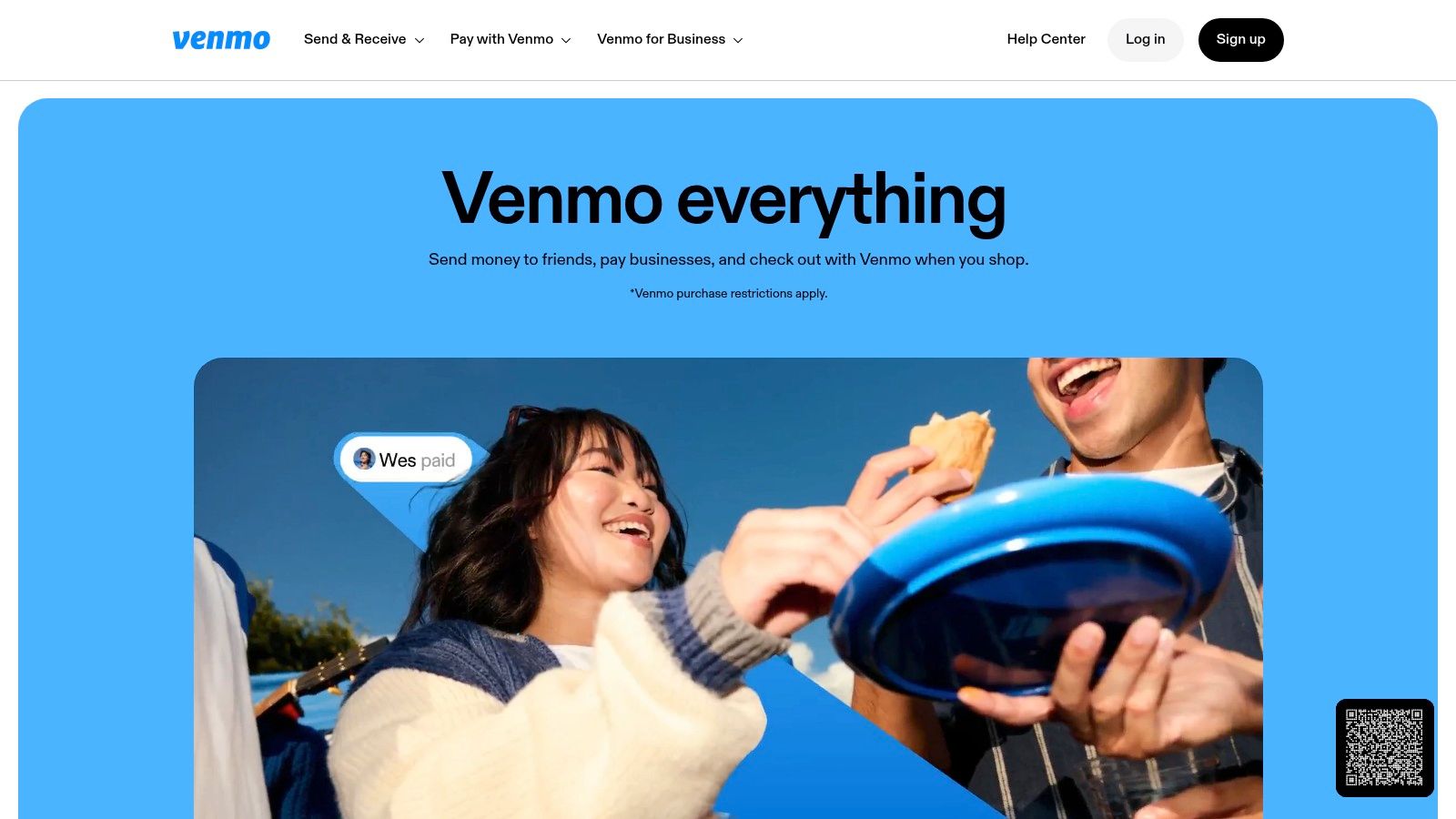
A friend pays the full dinner check, and five others need to reimburse them before the night ends. Venmo fits that scenario well because it is built around domestic social payments, not international transfers or detailed expense calculation.
Its advantage is adoption inside U.S. friend groups. People often already have an account, know how to search for each other, and recognize the request flow. That lowers coordination friction in a way feature lists often miss. A payment app is easier to use when the recipient does not need setup instructions first.
Where Venmo fits in the payment workflow
Venmo works best at the settlement stage. You can send or request money, use QR codes to reduce lookup errors, hold funds in-app, and move money out through standard or instant bank transfer options. That makes it useful after the amount owed is already clear.
It is less useful for the step before settlement. If one person covered a mixed receipt with shared appetizers, different entrees, and tip, Venmo will collect balances but will not calculate item-level shares for you.
- Best use case: Domestic peer-to-peer reimbursements among people who already use Venmo
- Strong point: Familiar request and pay flows for casual social payments
- Trade-off: Instant transfers can cost extra, and buyer or seller protections apply only in limited payment contexts
- Poor fit: International transfers or receipts that need item-by-item allocation
That difference matters in real group payments. A simple equal split can be handled inside Venmo with little effort. A messy receipt usually needs a separate calculation layer first.
Divvy addresses that earlier step. It scans the receipt, assigns line items, splits shared items, and allocates tax and tip proportionally. After that, the payer can turn those exact balances into Venmo payment requests.
You can use Venmo directly when the task is straightforward reimbursement. Choose something else if the primary concern is international delivery or figuring out who owes what before the request is sent.
2. Cash App
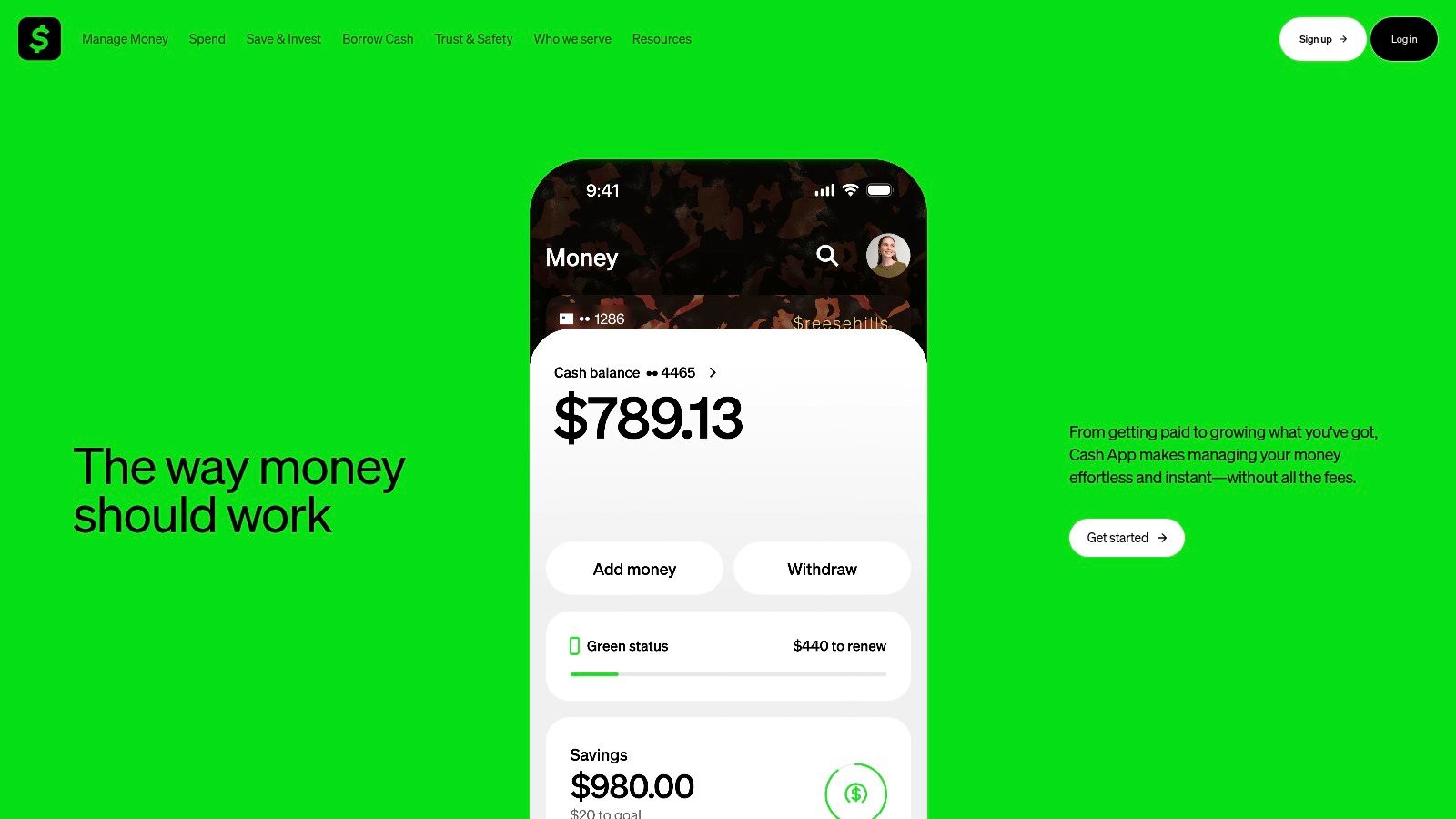
One person paid for drinks, dinner, and rideshare, and the group wants to settle before everyone heads home. Cash App handles that kind of domestic repayment well if the amounts are already settled and everyone is comfortable paying by $Cashtag or QR code.
Its strength is speed at the transfer stage, not at the calculation stage. Cash App makes it easy to send, request, and cash out funds, and features such as Pools can help with informal group collection. But a mixed receipt still has to be worked out somewhere else first, especially when different people ordered different items or shared only part of the bill.
That distinction matters because "send money" is not one task. Domestic peer-to-peer reimbursement, bill splitting, and international transfer each create different workflow problems. Cash App fits the first category far better than the other two.
For domestic settlement, the trade-offs are straightforward:
- Good fit: Fast peer-to-peer payments between people who already use Cash App
- Less good fit: Receipts that need item-by-item allocation before anyone requests payment
- Cost watch-out: Instant cash-out fees and some card-funded transfer costs
- Poor fit: International payouts or direct bank-to-bank delivery expectations
Divvy complements Cash App earlier in the process. A payer can scan a receipt, assign line items, split shared dishes, and allocate tax and tip proportionally, then send exact requests through Cash App using Divvy's request workflow. That combination is more precise than asking everyone to send the same amount or manually calculating who owes extra for drinks, appetizers, or tip.
When a group uses Cash App, the main bottleneck usually is not transfer speed. It is agreeing on the right amount and collecting it without follow-up messages.
If your group already settles inside one app, Cash App is a practical choice for U.S. reimbursements after the math is done. If the harder problem is splitting a messy receipt, tracking unpaid shares, or handling money across borders, choose a tool that matches that task instead of forcing Cash App to do all three.
3. Apple Cash (Apple Pay)
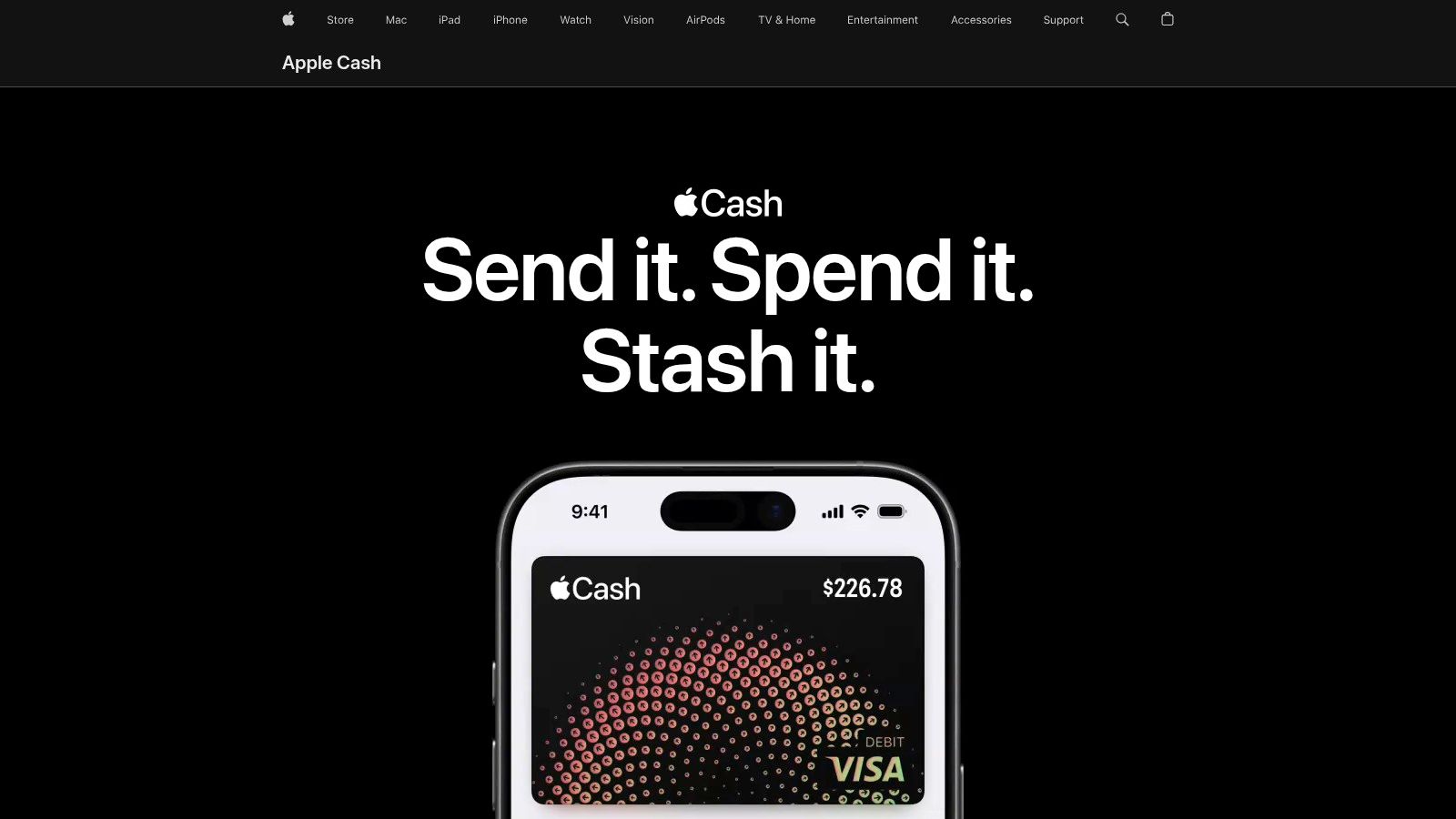
A common dinner-table scenario explains where Apple Cash fits. One person pays, the group is already chatting in iMessage, and everyone uses iPhone. In that setting, Apple Cash shortens the path from “What do I owe?” to payment because the transfer can happen inside Messages and Wallet instead of pushing everyone into a separate social app.
That workflow matters for domestic reimbursement, not for every payment job. Apple Cash is strongest after the amount is already settled. Recipients can keep the funds in Apple Cash, spend them with Apple Pay, or move them to a bank account. The convenience is real, but it depends heavily on device compatibility.
Mixed-device groups are where the trade-off becomes obvious. If even one person uses Android, that convenience disappears, and the group loses the advantage that made Apple Cash attractive in the first place. It also does less than tools built for organizing the split itself. There is no built-in item-level receipt parsing, no proportional tax and tip allocation, and no native reminder flow for the person who has not paid yet.
That is why Apple Cash fits better as a settlement option than as a bill-splitting system.
Divvy fills the step Apple Cash does not cover well. A payer can scan the receipt, assign items to each person, split shared dishes, and allocate tax and tip proportionally before sending payment requests and reminders. Apple Cash then handles the final transfer for iPhone users, while Divvy handles the part that usually causes disputes, which is calculating the right amount.
Use Apple Cash for U.S. person-to-person payments when the group is already inside Apple's ecosystem and speed of completion matters more than cross-platform reach. Choose another app if the group spans iPhone and Android, if direct bank settlement matters more than wallet-based payment, or if the harder problem is organizing who owes what before anyone pays.
4. Zelle
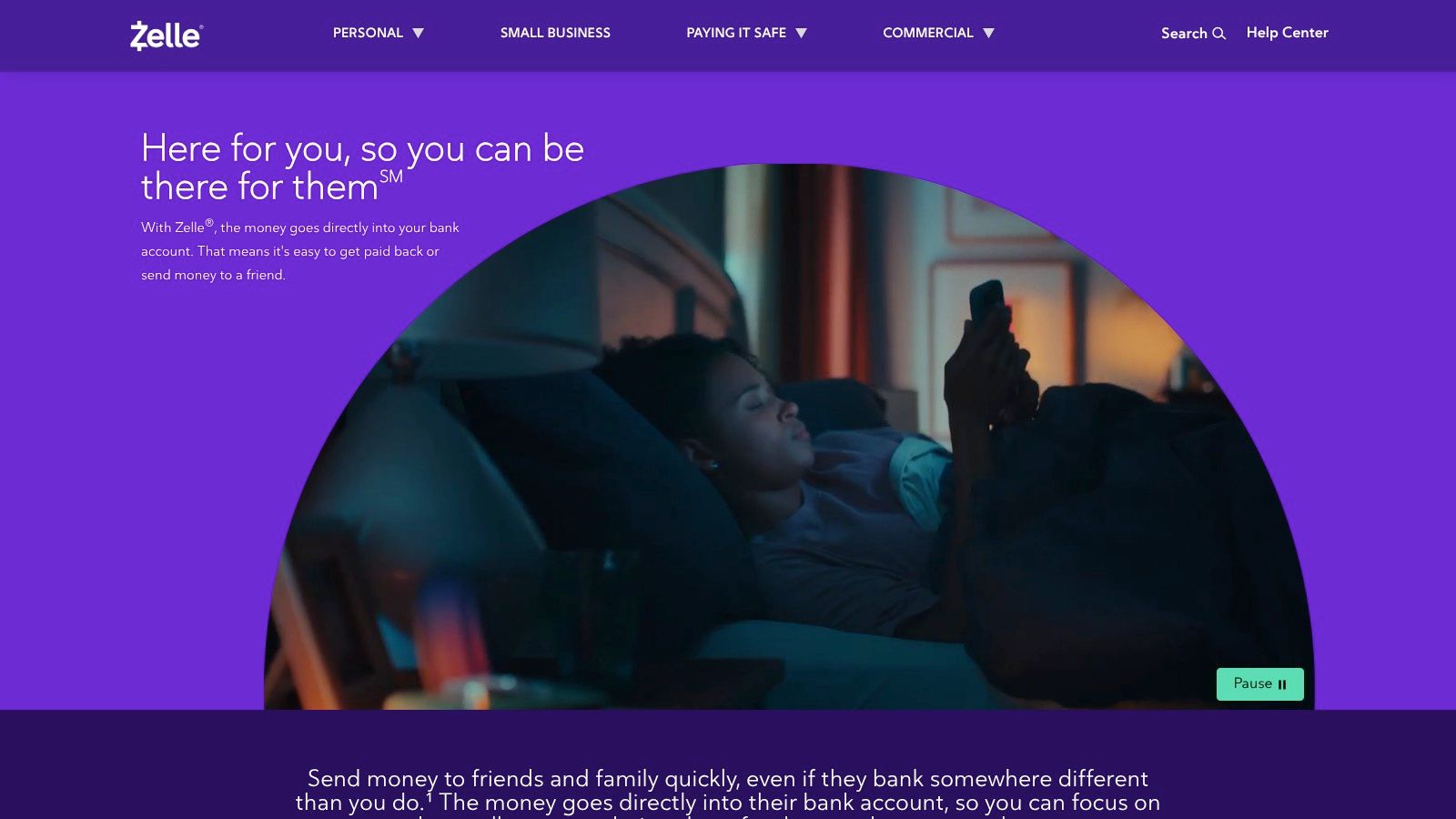
A common split-payment scenario goes like this: one roommate pays the electric bill, two others owe fixed amounts, and nobody wants money sitting in a separate app balance. In that case, Zelle fits the workflow better than wallet-based apps because the transfer is aimed at a bank account from the start.
That settlement path is the point. Zelle usually runs through a participating bank or credit union app, so the sender and recipient can move money within a banking context they already use. For domestic reimbursements between people who know each other, that can feel simpler than funding a social wallet and then cashing out.
Where Zelle fits is narrow, but clear. It works well once the amount is already agreed, such as rent shares, utilities, or paying back a friend for a fixed expense. It does much less for the earlier part of the job, which is figuring out who owes what.
That limitation matters more in restaurant, travel, and group-order scenarios than many people expect. Zelle can complete the transfer, but it does not parse a receipt, assign line items, split shared dishes, or allocate tax and tip proportionally. Divvy covers those steps first, then uses payment requests and reminders to collect the right amount. Zelle can still serve as the final payment rail after the math is settled.
The trade-off is risk and variability. Zelle does not provide buyer or seller protection for purchases, and sending limits or access can differ by bank. That makes it a poor fit for paying strangers, buying goods, or any transfer where a dispute process may matter later.
Use Zelle for U.S. bank-to-bank payments where the recipient wants direct account settlement and the amount is straightforward. Choose a different app, or pair Zelle with Divvy, when the harder problem is organizing the split before anyone sends money.
5. PayPal
A common PayPal scenario looks like this: one person buys concert tickets from a seller, later collects shares from friends, and then uses the same account to pay for an online purchase. Few money-sending apps cover all three steps from one login. That range is PayPal's main advantage.
It sits in the middle of several payment jobs that other apps separate. Venmo and Cash App are more native to casual social reimbursements. Zelle is closer to direct bank settlement once the amount is already fixed. PayPal matters when the transfer may shift from friend-to-friend repayment to merchant checkout, or when a personal payment could later raise a dispute question that pure bank-transfer tools do not address the same way.
That flexibility has a cost. For a shared dinner or group trip, PayPal still leaves the organizer to do much of the coordination work outside the transfer itself. It can move the money, but it does not scan a receipt line by line, assign specific items to each person, split shared dishes, or calculate tax and tip proportionally. Divvy handles those earlier settlement steps, then sends payment requests and reminders so the organizer is collecting the right amount rather than estimating and correcting later.
PayPal fits better once the amount is known than while the group is still figuring it out.
Another trade-off is workflow friction. Card-funded personal payments and instant transfers can add fees in some cases, and pending status can slow reimbursement cycles when someone fronted the total for a group. If that issue is already affecting collection, this guide on why PayPal money can stay pending explains what may be happening between send, review, and release.
Use PayPal when the payment scenario crosses between personal transfers and commerce, or when one account handling checkout, balances, and some international activity is more useful than having the lightest possible split flow. For itemized group expenses, pair it with Divvy or choose a tool built for calculation first and transfer second.
6. Wise (formerly TransferWise)
A common mismatch happens after a group trip: the expense is shared socially, but the repayment has to cross currencies. One traveler paid for the hotel in dollars, another owes their share from a euro or pound account, and a domestic wallet stops being useful at the exact moment settlement starts.
Wise fits that cross-border settlement step. Its value is less about social sending and more about showing the exchange rate, the fee structure, and the destination amount before the transfer is submitted. That makes it easier to evaluate than apps built mainly for domestic reimbursement.
The practical comparison is with the task itself. Venmo, Cash App, Apple Cash, and Zelle are built for domestic person-to-person transfers. Divvy sits earlier in the workflow by helping a group scan a receipt, assign items, split shared costs, allocate tax and tip proportionally, and send payment requests and reminders. Wise enters later, once the amount is already settled and one person needs to move money internationally through a bank deposit or, on some routes, a mobile wallet.
That division of labor matters because calculation errors and transfer costs are different problems. Divvy reduces the first. Wise is often the better rail for the second.
Use Wise when the job is repaying someone across borders with pricing clarity. Skip it for casual domestic bill splitting, where the transfer is only part of the coordination problem and not the hard part.
7. Remitly
A common remittance scenario is less about splitting a cost and more about matching the payout to the recipient's constraints. Someone sending money to a parent abroad may need bank deposit on one transfer, then cash pickup or mobile wallet delivery on the next. In that situation, the question is not who owes what. The amount is already decided. The harder choice is which delivery path gives the recipient usable funds with acceptable cost and timing.
Remitly is built for that decision. Its workflow centers on destination country, delivery method, transfer speed, and recipient access, which makes it a different tool from domestic wallets and also a different fit from bill-splitting apps. Visa's 2025 remittance reporting points to the scale of that behavior, noting that 67% of respondents prefer sending money digitally using an app, while World Bank figures cited in the report put global remittances at $905 billion in 2024.
That matters for comparison across real payment scenarios.
For a restaurant bill or group trip receipt, Divvy handles the earlier coordination work. It scans itemized receipts, assigns items, allocates tax and tip proportionally, and sends payment requests and reminders. Remitly enters after that stage, when one person already knows the final amount and needs to deliver funds across borders in a way the recipient can receive.
Its strength is recipient-side flexibility. Bank deposits, cash pickup, mobile wallet transfers, and speed options are more relevant here than social feed features or instant domestic wallet transfers. That also explains the trade-off. Remitly can be a strong choice for family support or urgent personal transfers abroad, but fees and exchange margins can change based on corridor, funding method, and delivery speed.
Use Remitly for recipient-driven international transfers. For domestic reimbursements or shared-expense coordination, choose a tool built for settlement among friends rather than cross-border payout logistics.
8. Xoom (a PayPal service)
A common mismatch looks like this: a payer settles a shared expense in a domestic app, then realizes one participant or family member abroad cannot receive funds through that same workflow. Xoom exists for that second step. It is less about splitting who owes what and more about choosing a delivery path the recipient can use.
That distinction matters in this article's broader comparison. Divvy handles the coordination stage for group expenses by scanning itemized receipts, assigning items, allocating tax and tip proportionally, and sending payment requests and reminders. Xoom starts after the amount is already known. Its job is transfer execution across borders, with payout choices shown before you send.
The practical appeal is the quote-and-delivery workflow inside PayPal's ecosystem. Xoom presents fees, exchange-rate information, estimated timing, and payout methods upfront, which makes it easier to judge whether a bank deposit, cash pickup, mobile wallet transfer, or mobile reload fits the recipient's situation.
For app selection, the better comparison is by scenario, not by brand familiarity:
- A dinner tab, household bill, or weekend trip reimbursement needs expense coordination first. Xoom does not manage item-level splitting.
- A cross-border payment where the recipient's access method determines success is a stronger Xoom use case.
- A sender who already uses PayPal may prefer Xoom over standard PayPal transfers when the transfer needs clearer destination-specific payout options.
The trade-off is variability. Cost and speed depend on route, funding method, and delivery option, so Xoom works best when payout certainty matters more than using the same app you use for domestic peer payments.
9. Western Union
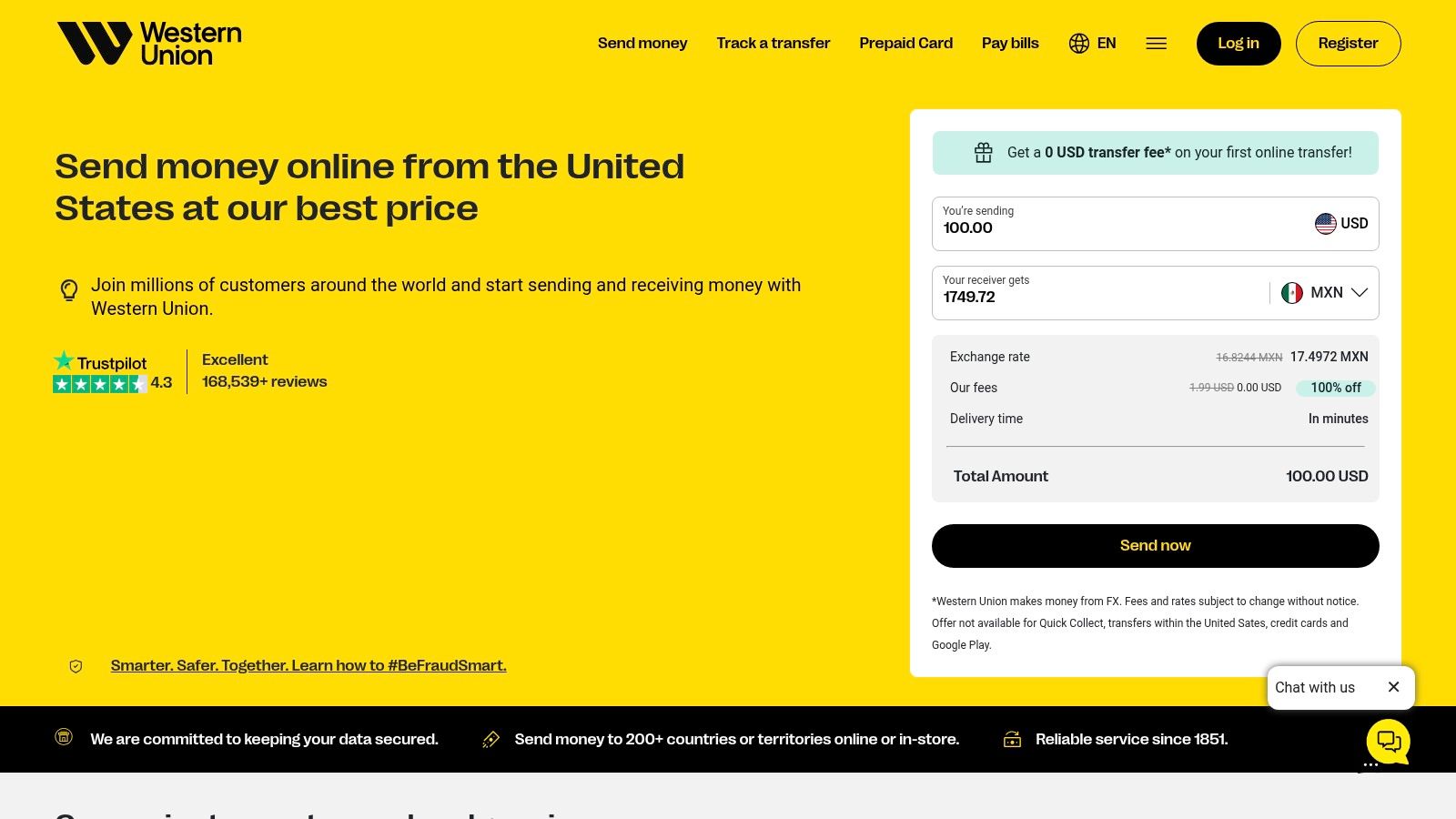
A common failure point in money sending is choosing an app that works for the sender but not for the recipient. Western Union is built for that constraint. It fits transfers where the question is not "Which app do both people already use?" but "How can this person get the funds where they live?"
That puts Western Union in a different bucket from domestic peer-payment apps and from bill-splitting tools. If you are settling a shared dinner, rent, or trip expense, the hard part is often calculating who owes what. Divvy addresses that stage with item-level receipt scanning, proportional tax and tip allocation, payment requests, and reminders. Western Union starts later in the workflow, after the amount is already decided, and focuses on delivery options across borders.
Its practical strength is payout flexibility. A sender can use Western Union for bank deposits, some mobile wallet routes, or cash pickup through its agent network. That matters when the recipient may have limited bank access, inconsistent wallet support, or a strong preference for collecting cash.
The trade-off is that Western Union usually asks the sender to compare more variables before sending. Cost, speed, and convenience can shift based on corridor, funding method, and payout route. A bank deposit may suit one transfer. Cash pickup may be the safer choice for the next.
Use Western Union when receipt is the main risk.
For readers comparing apps by scenario, the fit is clearer:
- Domestic reimbursements: Weak fit. It does not solve shared-expense coordination the way Divvy does, and it is not the default social rail for U.S. friend-to-friend payments.
- Bill splitting: Weak fit. You still need a separate way to calculate and request each person's share.
- International transfers: Strong fit when the recipient needs options beyond a bank account, especially cash pickup or agent access.
Western Union remains relevant for one reason. In cross-border payments, the best app is often the one with the highest probability of successful receipt, not the cleanest interface or the lowest advertised starting fee.
10. Revolut (U.S.)
A common travel-group problem looks like this: one person pays for dinner in dollars, another books a hotel in euros, and a third covers rides for everyone. The payment app has to do two jobs at once. It needs to move money, and it needs to keep the group aligned on who owes what.
That is the scenario where Revolut makes the most sense in the U.S. It combines domestic peer payments, group bill-splitting tools, and travel-oriented currency features inside one account. For groups already using Revolut, that can reduce handoffs between a social payment app, a separate expense calculator, and an international transfer tool.
Its fit becomes clearer when you compare the workflow, not just the feature list.
Divvy starts earlier in the expense cycle. It scans item-level receipts, allocates tax and tip proportionally, sends payment requests, and follows up with reminders. Revolut is more useful after the group already agrees on the amount each person owes. It can help split and settle, but it does not replace the receipt-level calculation and collection workflow that matters in uneven group expenses.
For U.S. users, the main trade-off is network reach. Revolut can work well inside a closed group that has already joined the app. It is less reliable as a default reimbursement choice for casual domestic payments, because the sender often has to confirm that the other person uses Revolut first.
A practical way to place it:
- Domestic reimbursements: Moderate fit for existing Revolut users. Weaker fit than Venmo, Cash App, or Zelle for ad hoc U.S. payments between people who may not share the same app.
- Bill splitting: Good fit for travel-heavy groups that want splitting and settlement in one place. Less capable than Divvy when the hard part is calculating uneven shares from a receipt.
- International transfers: Good fit for users who want spending, holding, and sending money tied together, especially across trips or multi-currency situations.
Revolut works best when the payment scenario crosses categories. If the task is just sending $20 to a friend in the U.S., broader domestic rails are simpler. If the task is coordinating shared travel expenses across currencies, Revolut covers more of the workflow in one app.
Top 10 Money-Sending Apps Comparison
| Service | Core features | UX & reliability (★) | Pricing / Value (💰) | Best for (👥) | Unique strength (✨ / 🏆) |
|---|---|---|---|---|---|
| Venmo | P2P payments, social feed, requests, bank/debit | ★★★★, familiar & simple | 💰Free bank moves; instant & card fees | 👥 U.S. social groups | ✨Social activity + easy requests; 🏆 U.S. ubiquity |
| Cash App | P2P, Cash Card, instant/standard cash-out, Pools | ★★★★, fast in-network | 💰Free std; instant & card fees (≈3%) | 👥 Younger users who want speed | ✨Bitcoin & investing features; 🏆 Fast transfers |
| Apple Cash (Apple Pay) | Native Wallet & Messages P2P, Apple Pay spending | ★★★★, seamless iPhone-to-iPhone | 💰Free std; instant-to-debit fee | 👥 iPhone users | ✨Built into iOS for frictionless sends; 🏆 Native UX |
| Zelle | Bank-to-bank transfers via banking apps | ★★★★, near-instant for enrolled users | 💰Typically no bank fees (varies) | 👥 Banked users with participating banks | ✨Direct account settlement; 🏆 Speed & low-cost |
| PayPal | Global wallet, P2P, merchant checkout, protections | ★★★★, broad but heavier UI | 💰Fees for card-funded & instant; cross-border costs | 👥 Cross-border & merchant buyers/sellers | ✨Buyer/seller protection + global reach; 🏆 Wide acceptance |
| Wise | Intl transfers, mid-market FX, multi‑currency accounts | ★★★★, transparent pricing & predictable | 💰Low FX markup; itemized fees shown upfront | 👥 Cross-border senders wanting fair FX | ✨Mid-market rates + clear fees; 🏆 Cost-effective FX |
| Remitly | Remittances: bank deposit, cash pickup, mobile wallets | ★★★, optimized for remittances | 💰Fees vary by corridor & speed | 👥 Senders to family/friends abroad | ✨Delivery tracking & speed tiers |
| Xoom (PayPal) | Intl bank/cash/mobile transfers; PayPal funding | ★★★, convenient for PayPal users | 💰Up‑front fees & FX (varies by route) | 👥 PayPal users sending internationally | ✨PayPal integration; transparent pre-send quotes |
| Western Union | App, web & agent network; cash pickup & deposits | ★★★, ubiquitous but can be pricier | 💰Can be higher fees/FX on some routes | 👥 Users needing global cash pickup/options | ✨Huge agent network & flexible payout methods; 🏆 Global coverage |
| Revolut (U.S.) | Multi‑currency accounts, instant in-network transfers, bill split | ★★★★, strong travel & FX tools | 💰$0 in‑network transfers; external fees may apply | 👥 Travelers & Revolut user groups | ✨Travel FX, in-app splits & cards; 🏆 Multi-currency convenience |
Match the Transfer to the Real Task
The easiest mistake with money sending apps is choosing by brand familiarity instead of payment scenario. A domestic friend repayment, a direct bank transfer, and an international remittance may all look similar on the surface, but they depend on different things. Recipient network, settlement destination, payout flexibility, and recovery options matter more than popularity alone.
For everyday U.S. reimbursements, familiar social rails usually win. Venmo, Cash App, and Apple Cash are strongest when your recipient already uses the app and you want a fast request-and-pay loop. Zelle works better when the goal is direct bank settlement instead of holding funds in an app balance. PayPal is broader and more flexible, but that flexibility can add friction when the task is just collecting dinner money.
For international transfers, choose by payout method and price clarity, not by domestic habit. Wise is useful when you care most about seeing costs and conversion details before sending. Remitly, Xoom, and Western Union are better fits when the recipient needs a specific delivery method such as bank deposit, mobile wallet, or cash pickup.
There's another layer that most app roundups miss. Payment apps settle balances, but they often don't solve the hardest part of a shared expense. The hard part is deciding what each person owes when the receipt includes individual items, shared dishes, tax, and tip.
That's where Divvy fits naturally. It's not trying to replace the payment rails above. It handles the calculation and collection workflow before the transfer app takes over. A user can scan a receipt, assign items to each person, split shared dishes evenly, and allocate tax and tip proportionally based on what each person consumed. Then the app can create payment requests through Apple Pay, Venmo, or Cash App and keep reminders going until balances are settled.
This makes Divvy especially relevant for restaurant groups, roommates handling household expenses, students, and trip organizers. Instead of forcing everyone into a ledger-style app or spreadsheet, it focuses on one bill at a time and lets settlement happen through payment networks people already use.
Use a simple decision framework before you send money:
- Check recipient compatibility: Make sure the other person can receive funds in the app or payout method you choose.
- Check settlement type: Decide whether the money should land in an app balance, a bank account, a wallet, or cash pickup.
- Check timing: Some apps are fine for casual repayment. Others are better when the recipient needs funds quickly.
- Check total cost: Look beyond obvious fees and look for transfer method or speed-based trade-offs.
- Check protections: Purchase protection, scam recovery, and mistaken-transfer support vary a lot.
- Check the split itself: If the bill is itemized, make sure you're solving fairness before you solve payment.
The best money sending apps don't all do the same job. Match the app to the payment, and the whole process gets simpler.
Divvy helps with the part most payment apps skip. It scans receipts, assigns items, allocates tax and tip proportionally, and creates payment requests through familiar apps like Venmo, Cash App, and Apple Pay so groups can settle exact shares without manual math. If that's the problem you're trying to solve, visit Divvy.